03 April 2012

Heathrow Chapuzas!!

Maybe you do not understand this Spanish word but at least one person who will is the Rt.Hon.Deputy Prime Minister, Nick Glegg.  This generally is used to refer to the actions taken, or to be taken, to fix a problem which is not a good solid everlasting solution but more of a "quick fix", a"half way house", a "temporary solution(which turns out to be permanent, or semi-permanent)". One thing that is implicit is that it is derogatory without doubt. No other word can express with such disdain work which is carried out in ways which are shoddy, badly thought out, and badly executed.

The infrastructures committed by the British governments over the last fifty years can, in many cases, be called "chapuzas". More specifically, those transport connections in and into Heathrow airport in search of solutions to problems have not solved the problems only in part but also badly. The ideas presently being floated for more solutions at Heathrow are being looked at piecemeal with the high likelihood of them being patches which do not give us good long lasting solutions. In other words we are being offered "chapuzas" yet again by these civil servants and politicians (these "chapuzeros"). 

Let us firstly look at the development of Heathrow.

(c) George Hayter


This was the layout of the airport when it was taken over from the RAF in 1946. The three runway triangular plan was typical of RAF aerodromes of the time.


(c) George Hayter
The report by the London Airport Advisory Layout Panel for development at Heathrow was presented in January 1947. As can be seen from the diagram up to 10 runways were envisaged using not only the existing area of the aerodrome but also an extended area to the north of the Bath Road (A4) which was to be diverted as shown.

This configuration provided three sets of parallel runways so minimise the effects of crosswinds.

After the extensions south of the A4 to be completed by 1949, the third stage north of the A4 was to be completed by 1953. The reason this stage was placed last was that it meant the knocking down of the village of Sipson. This was considered inappropriate in the immediate post war years due to the severe shortage of housing. Need it be said that Sipson is still there.

This was an opportunity lost since the development round the airport in 1953 was much less than at present. That third parallel east-west runway (Nº 8) would have approximately occupied the site of the 21st century proposed third Heathrow runway thus providing the airport(in 1953) with the expansion and flexibility it seeks now sixty years later. As a result of complying with that proposal other infrastructure planning would certainly have taken a different course. That blundering failure is an illustration of short-termism and political expediency - no vision.The idea was finally abandoned in December 1952.

As George Hayter says in his book, "...the recommendations of the Layout Panel contained few ideas which had not been well aired. 
Nevertheless, the Panel chose the most bold and exciting of all the possibilities." 
Suffice it to say that, apart from the above mentioned, they envisaged the central area, where the terminal(s) were to be situated, to be reached by a four lane tunnel under the north runway. This was built in 1950-53 and considered revolutionary at the time.


(c) George Hayter


This was the layout of the airport when it came into use in April 1955. It was later opened officially by the Queen on 16th December 1955.
Take note of the extended maintenance area to the east. This is where BA maintenance facilities are now situated. The Pan Am maintenance facilities are now occupied by Terminal 4.
Also the development along the A4, just north of runway 1, is very marked in the nine years from 1946.

In the central area was the Europa building which handled domestic, European and North African flights.The overseas terminal was still on the A4 and not in the Central Area. Long-haul flights had to wait until November 1961(BOAC) and March 1962(other carriers) to move to the Oceanic building in the central area.

By the mid sixties traffic had grown so that a new terminal was deemed necessary. This was opened in 1968 for all British, Irish and Channel Isles flights of BEA and Aer Lingus. The Official opening by the Queen was in April 1969 and it was named Terminal 1. She also renamed the Europa Terminal 2 and the Oceanic Terminal 3. Heathrow at this stage was handling 14 million passengers annually.

It was at this time that better transport links to central London were considered essential.

A lot of the information(the italics are quotations) in this blog is gleaned from George Hayter´s book "Heathrow - the story of the world´s greatest international airport." (Pan Books 1989)


1- Feltham to central area 
"Since the 1940s, British Rail have had plans to link Heathrow to their national network. The favoured scheme always used to be one connecting the airport to the Feltham line, which passes to the south of the airport and runs into the central London termini of Waterloo and Victoria."
It just goes to show that the planners then did not have the materials (post-war rationing) nor the money (bankruptcy of the country because of the war) but they certainly had vision.

The idea of a rail link into Heathrow came up again at the end of the 1960s. The idea mooted was a connection from Feltham Station direct to the central area, as illustrated.

There were two main problems to be considered........
(i) Lack of train paths: From Feltham station trains could go through either Twickenham or through Hounslow to where the tracks met at Barnes then to Clapham Junction and on to Waterloo or Victoria. The Victoria solution was preferred but rejected as it implied major crossover works at Clapham Junction so Waterloo was accepted as the terminus. However, these trains ran along the Windsor and Reading lines which had heavy traffic and lack of platform availability in Waterloo. Also the service level would have to be reduced during the morning and evening rush periods into/out of Waterloo. This would occur just when the same rush periods demanded nor less but more service to/from Heathrow.
(ii)Level crossings:Including one at Feltham itself, there were six level crossings along the Twickenham route while five along the Hounslow route. This would have meant closing the level crossings to road traffic for longer periods still, increasing road congestion. The cost of building the necessary bridges or tunnels for the road traffic was seen as excessive and unacceptable. Thus an opportunity was lost to solve a problem which exists even today and will have to be confronted at some time in the future.

These two reasons were paramount in causing the cancellation of the Airtrack project in 2011.

Thus the door was opened for London Transport to extend the Piccadilly line from Hounslow West to the central area.


2-Piccadilly line extension to central area


Work began in April 1971 on construction of the Piccadilly Line extension from Hounslow West to Heathrow Central (5.6 kms.).
Hatton Cross (for the maintenance area in the east of the airport) opened 19th July 1975.
The Heathrow Central extension was finally opened 16th December 1977. That year 24 million passengers passed through the airport.
The solution was considered acceptable at the time but all the interested bodies realised that other solutions had to be looked at.


3-Piccadilly line loop to T4

(c) George Hay
By the early 1980s passenger figures passed 30 million so a new terminal was built at the south east of the airport. This was opened officially 1st April 1986 by the Prince and Princess of Wales but came into operation, in fact, 12th April.

The single line loop from Hatton Cross to Terminal 4 round to Heathrow Central was opened with only one platform in T4 and is unidirectional.
This so far has proved adequate but leaves the loop with no flexibility in case of accidents and breakdowns.


The expansion to the south east of the airfield was BAA´s second choice.Firstly, they wanted to expand eastwards but this would have meant closing runway 2 which was "considered vital for crosswinds and emergencies." 

The rebuilding of Terminal 2 now taking place (spring 2012) is occupying that same runway 2 together with the satellite Terminal 2B. This means that another runway is being taken out with no backup replacement.

"When London Transport extended the Piccadilly Line to serve Terminal 4, they built the loop line further west than it apparently needed to go. So far west, in fact, that it almost passes beneath the sewage works, making possible the later insertion of a tube station here to serve a fifth terminal."
George Hayter wrote those words in 1989, three years before BAA announced their proposal for T5 in May 1992. Unfortunately, George was proved wrong.........as a different extension was built from the central area to T5. This is another example of sloppy planning and maybe for one or various different reasons such as.......

(i) London Transport did not talk to the right people to know their long-term intentions and so ended up with a shorter loop than was subsequently needed.
(ii) BAA  apparently did not take into consideration London Transport´s loop so built the terminal station (and T5) further west than could have been done.
(iii) No remedial construction work was considered feasible in place of a simple extension from Heathrow Central. The result means that London Transport ends up with an excess of unnecessary railtrack while T4 and T5 are unconnected directly - and such is the inconvenient situation today.


4- Heathrow Express to central area and T4

(c) National Rail May 2001
Even with the Underground extension to T4 plans were afoot for a connection from T4 to the Great Western Main Line(GWML) approved in 1988. This non-stop rail service  from Paddington mainline station to Heathrow T4 was opened in its full extension 23rd June 1998. The capital cost of GBP190 million was covered 80% by BAA and 20% by British Rail. Thus Heathrow Express(HE) is both operated by BAA and owned by them from the  GWML to the airport. However, it is (now) maintained by Network Rail for BAA.


As can be seen on the Google Earth map HE comes round in a sweeping curve from the central area to T4 ending up facing northeast. It does not give us the line of the track to T5, however.

This makes one think that nobody has thought nor considered it worthwhile leaving the options open by any extension from T4 which might be useful or beneficial, such as an extension to Feltham. Now any such connection would need another sweeping "S" double curve to connect the service to the Windsor/Reading main line.

Heathrow Connect (HC)(a joint venture between BAA and First Great Western) started 12th June 2005, running originally from Paddington to T4. This is a stopping service from Paddington along the GWML and then ran, originally, into Heathrow Central and T4. Now it runs only to Heathrow Central. From there anybody who wants to travel to (or from) T4 has to connect to an HE shuttle service.

The problem seems to reside in  the connection at Airport Junction between the HE line and the GWML. The frequency of trains is restricted which is why HE has 4 trains per hour(tph) running into T5 while HC only offers 2tph. The original connection at Airport Junction, Stockley Flyover, has a complicated system of operation.The original flyover connected the HE line to the fast lines on the GWML. With the introduction of HC services these used the GWML slow lines. This meant a combination of reverse running over the flyover and crossing the fast lines in the other direction(this is a total line capacity reducing measure). Yet another example of lack of forward planning (and/or cost cutting).

It seems that this problem should be solved (at additional expense, of course) with the introduction of Crossrail services in 2019 which will take over the HC services. These will run from Heathrow, probably T4, to the central area, through to Paddington then central London and out east at 4tph(double the HC frequency).

The Underground Piccadilly line services stop at T4 and wait up to 8 minutes before returning through the central area to central London. The frequency is approximately every ten minutes (i.e.6tph).

5-Heathrow Express to T5
6-Piccadilly line to T5

A new terminal for its own use was pushed by BA. The site chosen was the sewage farm between the north and south runways to the west of the airport. From conception to opening 19 years were needed, including the longest public enquiry on record at 525 days. Construction began in September 2002 and that year 63.3 million passengers used the airport.

(c) Transport for London March 2009
T5 was opened by the Queen on 14th March but officially came into operation 27th March 2008. Over 67 million passengers went through the airport that year. On the opening of T5 the HE trains started running into that station.

The original Piccadilly line loop round from T4 to the supposed T5 site and on to the central area was not sufficient, as has already been mentioned. As shown on the diagram the area was greater than that envisaged on the loop diagram.That meant that an extension of the original Underground connection from Hounslow West to Heathrow Central was now extended to T5. The service pattern set up was that some 6tph tube trains entered Heathrow at Hatton Cross and went south to rest at T4, then continued on the return journey through the central area back to central London. Another 6tph entered from Hatton Cross into the central area and on to T5. These then returned the way they had come.

(c) National Rail & Transport for London 2012

The map on the left shows the
system as it is today. LUT´s Piccadilly line runs to T4 and T5. HE is shown as running to T5 and HC is shown, erroneously, as running to T4, in both cases from Paddington. It should be emphasised that from Heathrow Terminals 1,2,3 to T4 a free HE shuttle is now taken.
The station in the central area has been known as Heathrow Terminals 1,2,3 since April 1986. However, it still retains that name despite Terminal 2 being knocked down in 2009. When T2 is reopened in 2014  T1 will be knocked down. Therefore, there is some confusion about what the name of the station will be. It is speculated that it will be renamed Heathrow Central. Probably, it is just as well that the name is not changed until the new T2 is reopened to avoid confusion.


7-Airtrack to Staines
When T5 was constructed it was provided with platforms for the Piccadilly line trains, the HE trains and two more, unspecified use. For once somebody had thought ahead.


An idea called Airtrack was promoted by BAA using these two platforms in the new T5 building. Three services were to be offered; Reading, Guildford and Waterloo. Each was to have a frequency of 2tph offpeak and 1tph peak periods.

The problems involved have already been looked at in point 1 with the Feltham connection. Basically, these were (i) lack of train paths (thus the reduction in peak periods) and (ii) level crossings (extending the services to Reading and Guildford meant additional level crossing closures during the operation of the trains  meaning additional traffic problems.

BAA also wanted to extend some HE trains from T5 to Staines (solely to increase traffic on its services). This would have complicated things more with an extra turnback platform to be built at Staines. As it turned out, a combination of the difficult problems encountered together with the government´s drastic cut in investments and spending, convinced BAA to drop the scheme in April 2011.

This blogger looked at the question 30th June 2010 in an article titled "Airtrack - is it worthwhile?"


8-Reading to Heathrow Rail Connection
The Transport Secretary, Philip Hammond  came up with this idea in  September 2011. It was floated as a shuttle between T5 and Reading to connect to the GWML and services to South Wales, Bristol and the west country. After the initial news nothing else has been heard.

This blogger looked at the proposal under the title "Reading - Heathrow Rail Connection" 6th October 2011, fairly soon after it came out.

Without repeating the arguments extensively, the idea of connecting the two free platforms at T5 with the GWML is a good one. However, if it stops at that then it is short thinking. The bigger picture should be looked at in which the Reading - T5 connection is only a part. If that is not done then we would fall into the trap, yet again, of thinking small and developing projects which are costly to rectify in the long run.

This particular project should be looked at with and linked to the Heathrow-Gatwick proposal.

9-Heathrow to Gatwick
This is a proposal to link(with the horrible name of "Heathwick") the two airports so that the two Gatwick terminals would function as extra terminals for Heathrow. Obviously, this had not been thought through. The idea of linking the two airports is welcome but not in the terms as mentioned.  


The broader picture has to be looked at again which this blogger did on 11th October 2011, "Heathrow - Gatwick Rail Link".

Here the proponents of the connection are thinking of, yet again, using the two free platforms at T5 to provide this link. Maybe at present they have the capacity to satisfy both(8 & 9) connections but if the services are successful then they will be proven lacking. That would mean, yet again, having to rectify short-term thinking with new constructions.

The two projects joined together (Reading - LHR and LHR - Gatwick) offer greater possibilities. If then the line were extended to Ashford(Kent) we then have a connection to the Chunnel. That then would open up the possibilities of connections to Europe(Paris, Brussels, Amsterdam, Cologne and even Frankfurt).
All this would provide traffic from the two airports (at least, and maybe even Luton), and from Reading (and all points north, west and south west from there). Direct trains are a possibility to mainland Europe bypassing the bottleneck that is London. It would mean that no spur from HS2 is necessary, alleviating the traffic through the capital. The possibilities of direct trains to mainland Europe from Wales, the South West and Birmingham are opened up while greater and better regional services are also a possibility.

These ideas have to thought through on a broader scale, and then planned and executed carefully.


10-mainline station Heathrow
On 16th may 2008 the infrastructure engineering group ARUP presented a plan to improve rail services between Heathrow and the rest of the country. It is also mentioned in a  Wikipedia article, Heathrow Hub railway station. 

This was to be situated north of the airport on the GWML connected by a shuttle service to T5. Here again they were thinking of using the free platforms at T5. However, this idea of a 12 platform station fell flat on its face because it yet again introduced a time wasting change for connections to the GWML and HS2. 

Duplicity of effort,  waste of resources, eating up of the Green Belt; there were many reasons to criticise this project. However, again the germ of the idea was not bad - if done at Heathrow. The basic objections were that it used the supposedly free platforms at T5, it did not take into consideration any other project proposed, and it was imprisoned in the concepts already put forward by the same engineering group to solve problems (HS2 etc.). 

Maybe the present infrastructure in Heathrow is non-adaptable to greater ideas or concepts. That is a question of looking at the present infrastructure with the plans to see if it can be adapted; also the traffic predictions have to be realistic and reflect the experience gained over the last fifty years. then we can consider if the present infrastructure can be adapted and used or if a new "heavy" rail station should be built to connect Heathrow to Gatwick and mainline Europe, and other parts of the country as well.

This we will look at in the next blog. 

What has to be looked at, firstly, is what the country wants to do with Heathrow. If it is closed then what substitutes it? Thus a strategic plan for aviation would have to be drawn up and implemented quickly. If the decision is taken to keep Heathrow for, at least, the next forty to fifty years then total plans have to be laid down and implemented as soon as possible. 

Then the mistakes of the past have to be taken into consideration, learned from, and avoided. Complete solutions to plans for national, regional and local transport needs have to be tackled. This would mean that Heathrow, or any other airport for that matter, would not be looked at in isolation but as part of a whole. If plans prove to be reasonable and feasible then let them go ahead  and not fall victim to narrowly interested parties or Treasury diktats. The greater good for the long-term should be paramount. That is the only way to avoid the mistakes of the past.


Note: Passenger figures reached a high of 68,068,304 in 2007. In the period 2008-2010 figures fell in the economic downturn. Now in 2011 the figures have recovered their upward climb and surpassed the previous high at 69,433,565.

23 March 2012

What´s in a name?

Llanfairpwllgwyngyllgogerychwyrndrobwllllantysiliogogogoch 
(For the non-Welsh speakers amongst us this translates as "The Church Of Mary In The Hollow Of The White Hazel Near The Fierce Whirlpool And The Church Of Tysilio By The Red Cave")


This is a name. It is the name of a village in Anglesey ("Ynys Mon") which has nothing of note except for its name, which is the longest official place name in the UK and Europe. The picture is of the rail station on the North Wales line from Chester to Holyhead , just across the Menai Straits from Bangor. In the 1960s the station closures ("The Beeching Cuts") meant that the island (except for Holyhead) would have been left with no stations. However, because of popular appeal the station remained open as a tourist attraction. Such is the power of a name.

In fact it was while looking at videos of British Railways that I thought of the significance of names, how evocative they can be. Those that remember the old railway companies or are interested in them will tend to think of the resulting Big Four companies after the regrouping of 1923. 
-The Great Western Railway - even the name has survived privatisation of the 1980s-90s
-The London North Eastern Railway - always to be associated with the Mallard and its 126 mph speed record for steam engines in July 1938.
-The London Midland and Scottish Railway - associated with the expresses to Scotland (in competition with the LNER) and the 1936 film "Night Mail". 
-The Southern Railway was the fourth company with a rather bland name which mirrored its image as a commuter transporter for London workers of all grades - especially from the stockbroker belt. This is in fact not totally true since the vast majority of internationally destined passenger traffic left Victoria for the Channels ports to France and Belgium, while intercontinental traffic to North America and the "Empire" went from Waterloo on special boat trains to Southampton.  


Most probably that association with the four railway companies at their zenith in the 1920s and 1930s is due to the ever widespread availability and use of film - documentaries and newsreels. Before the regrouping these were few, of poor quality, and above all with no sound. So apart from the odd image of locomotives there is little to bring back the names and the feeling of the previous companies. Such is the case that it is so pleasing that this engine depot at Warrington Central was (after being under threat for so many years) not knocked down but converted to flats. Again we have an example of the power of those names on the building - they are part of our heritage.


In the 21st century we are now dealing with privatised rail companies, initially trying to evoke the pre-1923 companies but some ignoring them completely. Now that the privatisation process is settling down we know what criteria the government is using to organise the rail system, which, in one major instance, is basically one operator for each London Terminus (as they were originally built).

In everyday parlance we talk about GWML (Great Western Main line) MML (Midland Main line) WCML (West Coast Main line) and ECML (East Coast Main line). With respect to the last, when the government took over the running of the line from National Express it named the operating company EAST COAST. A very simple but effective solution. If and when the company is privatised then all the operator has to do, if it so wishes, is add its name e.g First EAST COAST. That is what is done on the route to South Wales  and the West - operated by First Great Western. On the other side of the country the line would be WEST COAST operated by Virgin WEST COAST. If the operator changed then it would become e.g. Arriva WEST COAST. The greatest benefit would be continuity even if the operator changed. There would be identification with the line.

Probably this would not be possible on all the lines, and especially with the free access operators. Some names, though perfectly representative of the area served, presently in use might well be the property of the operators so any change to make them the title of the operation (not the operator) would have to be negotiated. The name should reflect where the line is and/or what it does.


Some do this already:
Chiltern,                   Cross Country,               East Midlands,                TransPennine
London Midland,      SouthEastern,                Southern,                       South West,
Merseyrail,               ScotRail,                        Greater Anglia,


While some need a makeover:
                                                      Arriva Trains Wales,                         c2c,            


The Northern franchise should be defined better. First Capital Connect should be First Thameslink. Heathrow Connect will be folded into CROSSRAIL while Heathrow Express will stay the same, with Gatwick Express and Stansted Express being part of the main operator on their lines.


Buses and Coaches
These services started coming to the fore in the 1920s and 1930s and reached their zenith in the 1950s and early 1960s. After that competition from cars and the "Marples" motorways produced a decline in use resulting in government interference to reorganise the industry. many of the names of the companies had grown up over the previous 8o years before being finally put to rest.The company names reflected the geographical areas in which they operated (though some had extended way beyond that) or the names of the founders.
Midland Red                                       North Western
Ribble-Standerwick-Scout       Trent 
Red & White                          Royal Blue 
Yorkshire Traction                            United Counties


   Southdown               Southern Vectis
   London Country   -    Greenline     
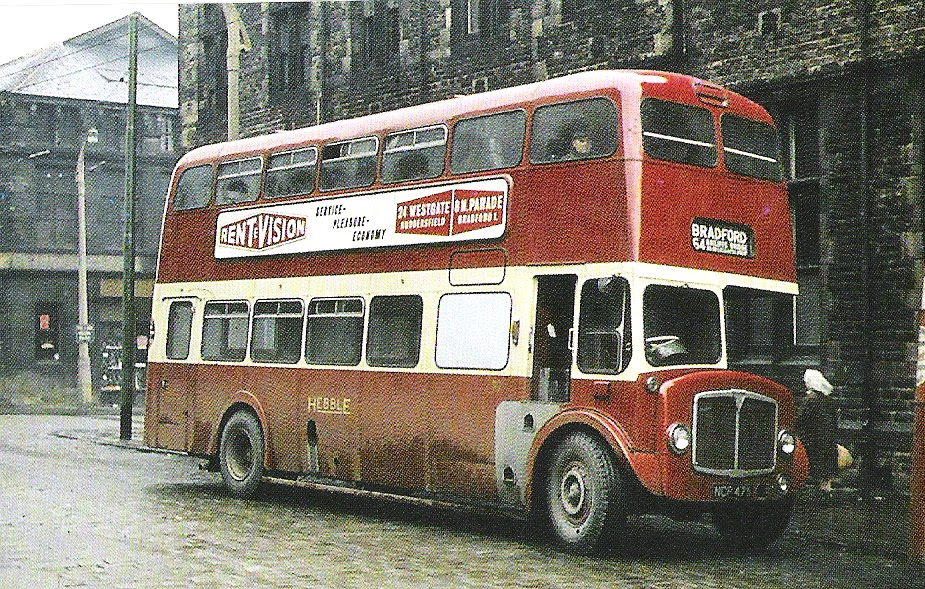
   Yorkshire Woollen     Hebble
   Crosville                    Eastern National


West Riding               Eastern Counties 
Northern General      Southern National
Rhondda                    Western National
United Automobile     Caledonian


  ........ to mention just a few.


The vast majority of the undertakings were grouped into two holding companies, the British Electric Traction group(BET) and Thomas Tilling. This latter grouping was nationalised in 1949 which included Bristol Motors and Eastern Coach Works (ECW). Thus Bristol Lodekkas in "Tilling Green" or "Tilling Red" with ECW bodywork were standardised vehicles for almost all the bus companies in the group.

The BET bus companies used a variety of different chassis and coach builders for their fleets. Some, like Ribble, standardised on Leyland chassis, offering in the 1960s single- decker Leopards and double-decker Atlanteans with a variety of bodies, principally Northern Counties, MCW and Burlingham. London Country followed the policy of its cousin of London Transport in using AEC chassis. Other manufacturers such as GUY were predominant in such fleets as LUT.


Of course, all this logical standardisation went out the window with the establishment of the National Bus Company (NBC) in January 1969. The NBC took over the interests of both conglomerates but decided upon rationalisation, reducing the big companies and extending the smaller ones. This meant that geographical areas, and their serving garages were transferred from one company to another.The resulting mix was a mish mash of vehicles according to the garages transferred.
Remnants of certain companies incorporated into NBC were merged into bigger units because their main business had been taken over by the regional transport authorities. For example, SELNEC incorporated most of North Western and all of Lancashire United.  Neither the name nor the livery of SELNEC or its equivalents were awe inspiring so did not help the promotion of transport by bus.


Fortunately, the bus industry was not dominated by those two conglomerates. Each municipality had its own transport company (normally inherited from the original municipal tram companies - or later trolley bus companies). Here the tendency to use the transport system to paint a brighter future for the town or city came to the fore. The variety of liveries amongst the municipal transport undertakings outdid the offerings of the two conglomerates.


In the North West alone the liveries of the corporation transport departments of Wallesey, Birkenhead, Southport, Bolton, Wigan, Salford, Leigh, St.Helens, Bury, Ramsbottom, Oldham, Stockport, Rochdale, Ashton-under-Lyne(which together with the less interesting Liverpool and Manchester fleets all disappeared into the Merseyside and SELNEC passenger transport authorities respectively) were astoundingly different from the big private companies, enough to provide a strong identity and subsequently loyalty. All this was lost under government decree.


The whole question came to a head with the incorporation of the municipal transport companies into the regional transport authorities in the 1970s (these would become the germ of the metropolitan counties). Not much later in the 1980s the privatisation of the transport industry meant the dominance of six conglomerates -  ARRIVA, GO-AHEAD, FIRST GROUP, NATIONAL EXPRESS, STAGECOACH, and TRANSDEV - which tried to take over all the private and municipal undertakings. 

With privatisation of bus services in the 1980s the take over of the municipalities, by the new private conglomerates, marched forward.This was, in most cases successful, with a notable exception in the Warrington Bus War of 1995. Here the the private companies tried to muscle in and take over the operations of the local municipal transport company(as they had in many other cities nationwide).  The local authorities appealed to the local populace to support their municipal bus company(Warrington Borough Transport) which they did, leading to the defeat of the conglomerates. This proved to be an important case of brand loyalty. Now it is a thriving 100% owned municipal company serving the local populace(known as Network Warrington).

Unfortunately, the vast majority of the transport undertakings in the 21st Century are under the wings of the six conglomerates with insipid and uninspiring names such as....
Arriva                    Buses Wales,  London, Midlands, Scotland West, Shires and Essex,
First                       Cymru, Devon & Cornwall, Eastern Counties, Berkshire & the Thames Valley
Go-Ahead              Go North East, Go South Coast, Go West Midlands, Go-Ahead London
National Express   Dundee, Coventry, West Midlands, Coaches
Stagecoach           East Midlands,East Scotland, Highlands, South, West,West Midlands, Wales. 
Transdev                London Sovereign, York, Yellow Buses,


In the 1960s the bus companies reached an acceptance by the public which identified with the companies. They produced an image of efficiency and modernity (after so many years of austerity). Then came the growing competition from the car. This resulted in the bus industry being "re-organised" in 1969 and then later in the 1980s.

The result now is a great number of companies owned by several conglomerates. Their names do not inspire any interest in them while their liveries are worse providing an all pervailing, boring and insipid colour scheme which  makes one reject any attempt to board their buses.
The general impression is that the bus companies have failed miserably to attract new passengers, inspire confidence, and promote interest in their services. No inspiring names, no interesting colour schemes, nothing to promote road travel, except for a bland corporate image of the owners - this is not good enough. 

A study done by the government gives data to indicate patronage of bus services in England.

Airlines
The history of aviation is dominated by national champions. The likes of Air France, Lufthansa, British Airways, KLM, Alitalia, SAS, LOT, Iberia, TAP, and so on, have been expressions of national pride and tools of foreign policy. Even though they are mostly privatised (in Europe at least) they are known as the "legacy" airlines because of the historical baggage they carry.

This has proved an advantage and a disadvantage. Governments still use their airlines to further their aims. They can be subsidised in various ways such as the US practice of obliging its federal employees to fly the flag, and not with the competition.  This is done by the French and German governments as well, at least.  Though the skies over Europe have, supposedly, been liberalised, as have those between the EU and the USA, it is difficult if not outright impossible to fly out of airports other than those in your own country except on your own airlines.  After the liberalisation of the skies between the EU and the USA Air France tried to initiate a route from London Heathrow to Los Angeles which failed and was withdrawn soon afterwards. BA´s subsidiary "Open Skies" has attempted to establish premium services from Paris Orly (and even Amsterdam) to New York (JFK & Newark) and Washington DC. It is now trying to consolidate on the Paris Orly - Newark route. Incidentally "Open Skies"(an awful cheap name not reflecting its product) was established and immediately took over a competitor from Orly called "L´Avion" (a sexier name which oozed exclusivity). Not using that latter name was perhaps BA´s error to extend the new airline´s services. The question of the right name/brand yet again.

Others who have broken the mold are the LCCs (Low Cost Carriers). Ryanair(named after its founder) and Easyjet (named thus to promote the largest shareholder´s franchised "Easy" name). By aggressive marketing they have established themselves in most of the European countries. Their nearest rivals are WIZZ based in the Eastern European countries and Norwegian (which is handicapped by its narrowly focused name). Vueling is trying to extend its bases from Spain to other countries but has an uphill struggle with its name - only Spanish speakers know that its name is based on the verb "to fly" - the "...ing" part is to make it sound "....cool".

In Europe and North America the legacy airlines have for a long time used their own names on feeder airlines - either their own or franchised. The chosen terms have tended to be Express, Connect,Link or Regional. Some have even set up "low cost" subsidiaries under the name Lite. Exceptions to this would be American Eagle, KLM Cityhopper, and Lufthansa CityLine.( KLM and Lufthansa both have also, respectively, arms length subsidiaries in Transavia and Germanwings.)  British Airways has two franchisees operating in Denmark and South Africa under BA´s own name. Iberia has its Regional brand flown by Air Nostrum while it is setting up Iberia Express to begin operations this Sunday (25th march 2012). All these are attempts to associate the company with the main legacy airline and look for synergies that way.

The Virgin Group has stakes in three airlines, as well as many other businesses. The idea is, like the Easy Group, to lend the name and the image for a royalty. These are Virgin Atlantic, Virgin Australia, and Virgin America. They all use the marketing skills of Virgin Group chairman, Richard Branson, to promote their businesses while sharing the same corporate image, but that is where it stops. There is no other linkage between the businesses. In fact the Virgin Atlantic brand is , erroneously, promotered as a British airline whereby it could gain greater weight as a European brand with all the Virgin companies spread throughout Europe.

In Asia the legacy airlines seem to want to distance themselves from their offshoots as they offer a different product. The latest additions are, Peach Aviation set up by ANA in Japan and Scoot set up by Singapore Airlines as the most notable. Qantas has been expanding into Asia(Singapore, Vietnam and Japan) with its JetStar subsidiaries/affiliates.Singapore Airlines has had less success with its partially owned Tiger Airways probably because it did not have full control.  
Air Asia(the image has been well known for being worn on the upper arm of the referees in English Premier league football matches) has also been around for some time expanding from its own base in Malaysia to establish subsidiaries in Thailand and Indonesia, but is yet again allied to Malaysian Airlines through cross shareholdings.


To sum up names, as well as colour schemes, as well as images, are all important for the strength of a brand. They can so easily put us off flying with them or put us on their planes.


This is a quotation from the periodical anna.aero dated 6th March 2012, - "Have you noticed that low cost carriers started by legacy airlines – All Nippon Airways is involved in Peach – always have the craziest names? Snowflake/SAS, Ted/United, Song/Delta, Zip/Air Canada, go/British Airways, buzz/KLM, bmibaby…hopefully that’s where the comparison ends and Peach won’t get eaten-up by competition." None of those has lasted while bmibaby has been sold and its future is most probably extinction.


Names are part of brands and their images. You can promote or ruin a business according to the importance you give it. Choose carefully, define the target market, and persevere.

23 February 2012

Heathrow´s 3rd runway - how to focus

In the early days of the Tory - LibDem. coalition government the initial knee jerk reaction to the environmentalists´ demands for a reduction in airport use, was a complete banning of any runway building at Heathrow, Gatwick and Stansted. Now the realities of being in power have made the government start looking at the proposals again. On the table for discussion is the need for more runway capacity in the South East of England.(See the article in BREAKING TRAVEL NEWS of 20th February 2012)

The need for a new third runway was emphasised again with the publication of the CAA data relating to passenger traffic at all British airports for the period 2011. 69.4 million passengers  went through Heathrow airport in 2011 with it operating at 99.2% of capacity. Even the January 2012 figures are up on Jan. 2011 by 2.3%( which is considered not bad since we are supposed to be at low economic activity). However, what has to be looked at is the  "why", "what for" and "for whom" of the question of the third runway.

What it is not.
This third runway should not be looked upon as just an additional runway at Heathrow airport to be used freely, without any limitations. That is really not an option. That would only increase the acoustic and air pollution to other areas of the South East. If you imagine A330s, A380s, B747s, and B777s flying to and out from it then you could see that the runway would just multiply the noise and fumes as produced from the preceding two runways. The worst fears of the environmental lobby, to a large extent justified, would be realised.  

A solution must be found and can be found to square the needs of the airport as a hub and the fears of environmentalists.


Having looked for maps about the proposals for a third runway, none has been found that can really be called credible so an impression has been shown by this blogger. To understand what is illustrated one has to see that three criteria have been used. 
1- the distance from the present northern runway to the new third runway is 1.5kms. thus enabling independent usage of the runway.
2- the length of the third runway is the same as the other two runways.
3- the width of the third runway is the same as the other two runways.

About these points, in general, there cannot be any real discussion. The distance to the north is laid down in safety legislation and instructions. There might be a small difference in the actual measurements, but nothing appreciable to make a significant difference. What does the (Civil Aviation Authority) CAA want really and what does safety demand?The length of the runway must be decided upon the needs of present and anticipated aircraft for take-offs and landings.Both the B747 and A380, the largest aircraft flying or due to fly, need up to 3.5kms of runway for take off. Landings need far less distance. Obviously smaller aircraft need less room.The width of the runway is dictated by not only the size of the aircraft, but also the margin needed in adverse meteorological conditions. This means crosswinds which can be quite tricky as anyone who has seen the YOU TUBE videos on the subject can testify. Safety must be paramount in these considerations. 

You might ask why the third runway(R3) has the same dimensions as the other two main ones?Well this blogger considers it a waste of time, space, effort and money to fight for a platform which others could and would well consider inadequate in the,not too distant, future.

It has to be said out loud that one of the considerations for building this runway is to facilitate the better use of facilities and runways at the rest of the airport. One extremely important aspect to consider is if one of the two main runways is put out of action. This could be because of weather (as has already happened), accidents (fortunately few and far between),normal maintenance (even runways have to be relaid from time to time) or whatever exceptional reason.

However,the be all and end all of R3 is NOT to be a substitute runway for the first and second. If a focus on its aim can be given then a better understanding of its workings can be provided. 

As stated before this blogger considers that R3 should be independent of the other two.This is important in that it means no planes crossing south to or over the other runways so not causing potential interference in operations and increasing risk. The way to make efficient use of R3 is in mixed-mode. This means that the runway is used for both take-offs and landings at the same time.That also means no usage of terminals 1-5 by planes landing on/taking off from runway three. Therefore, the answer is a terminal 6 (T6) specifically for the services run from R3. Obviously,at T6, a new rail station would be built on the line to Paddington so that Heathrow Express and Crossrail (at present Heathrow Connect) services could provide connections to both Central London and the other terminals.


Size of aircraft. Propeller driven aircraft have long since disappeared from LHR to be replaced by jets. Even these days the small jets have tended to disappear in favour of medium sized ones. The smallest jets generally are Airbus 319/320s or Boeing 737s. One thing is to try to maximize revenue from each route flown by having bigger aircraft flying. At an airport like LHR where capacity is limited then this is quite logical but means that the "thinner" routes (those with fewer passengers flying) get cut out.

Safety factors:To fly smaller aircraft (or even medium sized ones) behind large ones is extremely dangerous due to the wash from the engines. The is true on both landing and take off. Apart from collision precautions the distance a smaller aircraft flies behind a larger one is determined by the turbulence caused. This rules out any small jet and turboprop following a B747 for example. The smaller aircraft would be just thrown around the air.The turboprops tend to fly at slower speeds also so demand a greater separation between aircraft than if they were all jets flying at the same speed.


The access for smaller aircraft is thus limited. With R3 this access can be provided. As you can see from the photographs below they are all propeller driven aircraft e.g. ATR, BAe Jetstream and Dornier. These are the sort of aircraft which most likely multiply on Heathrow runway 3. They will share the airspace with the medium jets (A319/320s ;  B737s), and small jets (Bombadier CRJs and Embraer ERJ/170/190s). Thus, attractive but less dense routes would be opened and serviced - most probably leading to a greater variety of destinations.


Noise created:It should also be said that the smaller the aircraft the lower the noise they make even if they are all jets. Obviously the smaller jets need less thrust for take offs and landings than their bigger cousins so it is safe to say that the noise factor, and thus toxic fume factor, will be much lower than for the other two runways. It is superfluous to say that the propeller driven aircraft make no noise of note outside the airport boundary. The road traffic on the parallel M4 motorway provides much more noise(and fume) pollution.


What areas does the T6 serve?
The British Isles should be considered as a whole. 

Ireland has no road or rail connection to Great Britain, so it is essential that air connections are provided to the greatest extent possible to those areas which wish to be connected to Heathrow(LHR). At present Aer Lingus provides 23 daily flights to Dublin,Cork,Shannon and Belfast. Bmi(before its absorbtion into British Airways - BA) provides another 10 daily flights to Belfast and Dublin. What will happen to those flights once inside BA is anyone´s guess at the moment, all, some or none might be kept. What can be said is that there is a demand from (probably) 4 more airports in north and south Ireland.

The Crown Dependencies of the Isle of Man and the Channel Isles (Jersey, Guernsey, Alderney - the other islands have no airports) have lost representation at LHR over the years so that they now have no flights. It is an unacceptable situation whereby flights from UK or Crown territories, with no option of road or rail connections, wish to maintain an air link to the UK´s hub airport but have been squeezed out so that the "slots" can be "used more profitably in expanding markets". This is cowtowing to the wishes of the airline lobby. The British Government must have a coherent aviation policy including the defense of connections from the major hub airport to the outer reaches of British territories at reasonable cost.

The outer reaches of Great Britain itself have lost many of the connections to LHR. Newquay, Plymouth(airport now closed), Exeter, Leeds/Bradford, Teeside, Inverness - once busy routes now have no connections. The domestic flights that remain are from BA (Manchester, Newcastle, Edinburgh, Glasgow and Aberdeen) totaling 43 flights per day and Bmi (Manchester, Edinburgh and Aberdeen) totaling 16 flights per day. More than likely these flight numbers will be reduced as Bmi is absorbed into BA thus leaving BA as the only airline flying domestic flights into LHR.

There is a possibility that the competition authorities insist BA give up some slots so that a/some domestic competitor(s) can provide an alternative service. The best suited competitor to step into this role easily (as indicated by its flight patterns from Gatwick) would Flybe. Even that would be problematic since BA owns 15% of Flybe. Whatever the solution this will always be a stopgap policy until the third runway is built. Then to provide true competition domestically any airline should be permitted to fly into LHR using runway 3 and T6 from any domestic destination. Without mentioning the places already named there could possibly be a demand from another 8 domestic destinations.The cost of using the airport facilities would most likely determine demand from different airlines from different destinations.

Virgin Atlantic has come out yet again objecting to the BA/Bmi takeover in TRAVELWEEKLY (20 February 2012)‘Block BA and Virgin will replace BMI’As a headline it reads well but Richard Branson is always good for a quote but little else. The Virgin Group had their chance to bid for Bmi, were beaten by BA and did not try to up the price so has lost out. Sir Richard´s credibility is now at rock bottom.Somebody else will have to step in to provide the competition at LHR for BA, probably with the help of the competition authorities. Maybe in the meantime Bmi Regional, which has already been sold off to investors (not IAG/BA) might be an alternative. The only other airline of note is the regional Eastern Airways (based in Aberdeen as is Bmi Regional). Flybe has already been mentioned as a possibility.We shall have to wait and see.

 
There are no longer any services from LHR to the Isle of Man and the Channel Isles. However, considering which airlines fly from other London airports to all or any of these destinations, BA would fly to only Jersey. To Jersey and Guernsey would fly Flybe, Aurigny Air Services, and even Blueislands while the Isle of Man would be served by Flybe or even Aer Arann. Alderney presents as problem as an adequate aircraft has to be found to operate from its 880 meter runway.

(c)Adrian Pingstone

(c) Wdollivier at en.wikipedia


(c) Aleks.B
The number of flights that would be produced by opening up R3 is impossible to estimate - even if the flights are limited to the British Isles. However, we do know the present number of flights to/from LHR. If we look at the three categories already mentioned then for the Great Britain domestic flights, Ireland flights and Crown island flights the total be 92 flights per day. Since, however, R3 would be used in mixed mode then the aircraft movements are double that- 184 daily movements.


To put this into perspective the number itself is not a lot for the premier UK hub, and not even just one runway. Gatwick is Britain´s second airport and uses just one runway in mixed mode. Assuming that the demand for slots could approach Gatwick´s number then there is plenty of room for maneuver. Though nobody would dare suggest that normal usage would demand so many movements Gatwick Airport´s own website does give the information that Gatwick´s busiest day was 22 August 2008 when there were 895 aircraft movements. I am not suggesting that the third runway at Heathrow should or even could have so many daily movements as that exceptional day at Gatwick. However, it does go to show that the possibility of expansion to accommodate flights from every region of the UK and the other islands would be a viable proposition.

Therefore, this blogger suggests looking at other destinations which might benefit using R3 and came up with 4 other island nations - Iceland, the Faroe Islands, Malta and Cyprus. The destinations would not be squeezed out (but even allowed in, in the case of the Faroes) without tremendous disruption.Being based at T6 would not suppose splitting up airline opperations or alliances. Present daily flights 7 (14 movements).  

To increase usage of R3 while limiting the disruption the Benelux countries were looked at. Each country´s capital airport runs flights into LHR - from Brussels, Luxembourg, and Amsterdam.Flights do not operate into LHR from the other five airports of some importance in the region. Here the countries are close, with strong competition from Eurostar rail services (with the possibility of being extended from Brussels to Amsterdam in the near future). In fact the flights operate just like Great Britain domestic ones. In total 33 daily flights / 66 movements.

Other destinations/countries were looked at  and none came up as really interesting additions to T6. Switzerland seems to be the most likely candidate to be able to transfer flights and operations to T6, but without doubt LHR would come up against the wishes of the airline Swiss, backed up by the rest of the Star Alliance and even the Swiss government. In the case of Air France, Alitalia, SAS or Lufthansa then they would most likely have to split operations. Other smaller operators would lose the benefits of flying to/from the 4 main terminals. Longer distance operators tend to use bigger aircraft making difficult aircraft use on R3. BA is the only operator asked to split operations, between T5, T6 and probably still also at T3. However, this should be no great difficulty for the airline since it will possess 53% of the slots  in 2012 at the two runway LHR. It is also the greatest beneficiary since it wants the slots vacated on the two runways to be made available for expansion into more long-haul services. Other operators would pick up most of the other slots vacated.


(c)Adrian Pingstone


What it means in movement at the airport.
All three alliances would be affected.
BA (oneworld)would move all its domestic flights, its Benelux flights, and its Cyprus flight to T6 (61 daily flights).
Bmi would move its domestic and Ireland flights(26) to T6.
Aer Lingus would move its Ireland flights (23) and entire operations to T6.
Brussels Airlines(Star Alliance) would move its Brussels flights (4) and entire operations to T6.
c)Konstantin von Wedelstaedt
KLM (Skyteam) would move its Amsterdam 
flights(12) and entire operations to T6.
Icelandair would move its Reykjavik flights(2) and entire operations to T6.
Cyprus Airways would move its flights (2) and entire operations to T6.
Air Malta would move its flights (2) and entire operations to T6.


(c)Adrian Pingstone


If the flights to Luxembourg were transfered to T6 then it would mean the return of Luxair to LHR.


The entry of the Faroe Islands into LHR would mean their international carrier Atlantic Airways would make an appearance.


As has been shown the capacity of R3 is such so as to provide room for a large number of present aircraft movements at LHR - 132 flights/264 movements daily - that would translate into about 87-90,000 movements per year. That is without adding any new flights or destinations. These movements would be taken from the present two runways so free up space for the much desired long-haul operations.

A lot of the slack in the slots at R3 would be taken up by competitors to BA on domestic and Irish routes. Even from near Mainland Europe, where jets do not have such a time advantage as over longer distances, there could well be (non-alliance) operators willing to set up flights on "thin" routes using smaller aircraft which the "legacy" carriers do not want to operate. In the Benelux countries flights could originate from Groningen, Eindhoven, Maastricht, Rotterdam or Antwerp; from Germany, Dortmund, Düsseldorf or Cologne; and from France, Rouen, Cherbourg, Dinard or Le Havre.

Conclusion:
-A third runway to be used principally and preferably for ALL British Isles flights, favouring the establishment of services to the outer reaches of the islands.
-the size of the runway to be determined by needs in exceptional circumstances so as to maintain the smooth running of the airport for all passengers.
-An independent terminal to be provided (T6) for ALL operators on R3. This would be connected to the other LHR terminals and Central London through a dedicated rail station on the Heathrow Express line under or next to the terminal.
-Severe limitations to be put on operators to ensure the use of less noisy aircraft which over the years will demand a steady reduction in decibels produced on landing and at take off.
-Severe limitations to be put on operators to ensure that engines on the aircraft do not surpass certain strict maximums on toxic emissions which will be reduced over a determined time (e.g. one generation).
-These limitations on noise and fumes to be extended gradually to the other runways and other airports over a reasonable length of time.
-To lift the restrictions on runway building at other airports, meaning Gatwick, so that runway construction can start there  when the present limitation runs out in 2019.
-The previsions and limiting factors to be put into binding legislation and applied with vigour.
-Consider proposals for a fast rail line from Reading, through Heathrow then Gatwick and on to Ashford. This would open up the possibilities of direct rail services from both airports  Englandwide as well as to Mainland Europe.


***********************************************************************


This blogger has already written extensively about this problem since 
29 March 2010("Runways in South East England"), 
5 July 2010 ("Luton - the Next Best Bet?") 
26 January 2011("a new airport for London")
and others up to the present.